Explore Free Beanie Knitting Patterns for Every Skill Level
This article offers a curated selection of free beanie knitting patterns, organized by skill level and style, making it easy for knitters to find the perfect project. It includes a beginner-friendly pattern and essential tips for yarn selection, gauge measurement, and crown shaping techniques.
Free beanie knitting patterns are abundant once you know where to look, but the challenge lies in selecting the right one based on your skill level and yarn stash. This guide categorizes patterns by difficulty and style, introduces a beginner-friendly beanie pattern you can start today, and provides essential tips on yarn, needle selection, and crown shaping techniques.
Beginner beanies typically require a cast-on of 88 to 104 stitches using worsted weight yarn, depending on gauge and head size. When choosing a pattern, consider your skill level and the yarn weight available. Easy textured or striped patterns can be a great next step after mastering ribbed beanies.
Accurate gauge measurement and negative ease are crucial for ensuring a snug fit, making swatching an important step before starting any project. Different crown shaping methods can yield various visual effects; gradual decreases create a smooth dome, while quicker decreases or pinwheel patterns offer unique textures.
Sorting patterns by skill level first and style second helps you avoid downloading multiple PDFs before finding one that matches your experience. Here’s how the major categories break down:
- **Beginner:** Basic ribbed, folded-brim beanies using a single stitch (usually knit 2, purl 2 or knit 1, purl 1 ribbing) worked in the round. These typically involve a cast-on of 80 to 100 stitches for worsted weight yarn and are one continuous tube until the crown decreases begin.
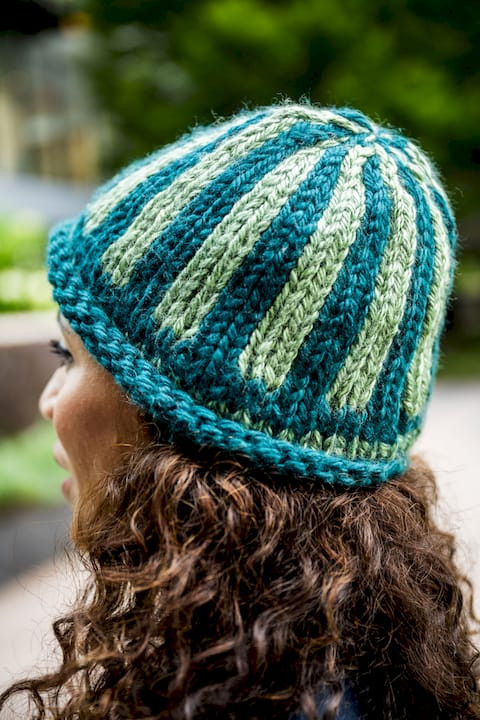
- **Easy and Everyday:** Textured or color-stripe beanies that add simple texture (garter ridges, seed stitch bands) or color changes without stranding. These patterns work up quickly and make excellent last-minute gifts.
- **Textured and Cabled:** For knitters ready to track a repeat, cables, brioche, and honeycomb stitches can transform a plain hat into something visually striking. The challenge here is not the cable itself but learning to read a chart or written repeat while shaping decreases at the crown.
- **Chunky and Quick:** Bulky and super-bulky projects that allow for a finished hat in one sitting. Weight #5 and #6 yarns knit up quickly, making them ideal for those who want a fast project.
Exploring Slouchy Hat Designs
- **Slouchy and Beret:** These styles are designed for a relaxed silhouette, often requiring extra rounds before decreases start or increasing stitch count partway up.
A few sourcing notes worth knowing include multi-weight patterns that offer instructions for several yarn weights, reducing the need to buy new yarn. Most pattern collections include multiple adult sizes and often child or baby versions in the same download.
This pattern uses worsted weight yarn (#4), worked bottom-up and seamlessly in the round, making it beginner-friendly as there’s no seaming at the end. Adult cast-ons for worsted weight typically fall between 88 and 104 stitches, depending on your gauge and head size, so be sure to swatch first and adjust your cast-on number accordingly.
To cast on, use a stretchy method like longtail or German twist, ensuring that your cast-on number matches your rib pattern multiple (for example, a multiple of 4 for knit 2, purl 2). Join in the round on circular needles or double-pointed needles, being careful not to twist the cast-on row. Work the brim in ribbing for 1.5 to 2 inches, or longer if you prefer a folded cuff.
Switch to a larger needle (one size up from the brim) and knit the body in stockinette until the hat measures about 5.5 to 6.5 inches from the cast-on edge, depending on head size. Begin crown decreases once you reach that length, using a simple eight-section decrease scheme. Finish by pulling the yarn tail through the remaining stitches and cinching tight.
Getting the right fit comes down to one key measurement: your head circumference minus negative ease. Most adult heads have a circumference in the low twenties of inches, and a snug-fitting beanie should measure slightly smaller than that when laid flat and stretched. Start your crown decreases when the body section reaches about five and a half to six and a half inches from the cast-on edge, adjusting for a slouchier fit as needed.
The Next Stitch
For your beanie, you’ll need circular needles (16-inch for the body or a longer cable for the Magic Loop method) plus double-pointed needles or a second circular for the crown if you’re not using Magic Loop. A tapestry needle, scissors, and a stitch marker round out the basics. Optional add-ons include a pom-pom or a contrast-color brim.
Prioritizing the swatch and fit math before selecting a pattern can make your knitting experience much more enjoyable. Once you have those numbers solid, you can focus on the fun part: choosing a style that you love. Lion Brand’s free pattern library is a great resource for finding beanie patterns that match your experience and yarn stash, making it easier than ever to get started on your next project.